
Japan's Unpredictable Road

Japan enter the 2026 World Cup with a deeper European-based squad, a strong recent tournament record, and the same unresolved question: can the Samurai Blue turn surprise results into a sustained knockout run?
Japan are one of the hardest teams at the 2026 World Cup to place in a neat category. They are not a traditional title favorite, and they do not arrive with the overwhelming individual power of the biggest European or South American squads. Yet once the match begins, Japan can become deeply uncomfortable to play against: compact without the ball, fast in transition, technically clean under pressure, and brave enough to attack opponents with bigger reputations.
That unpredictability has history behind it. The 2026 tournament will be Japan's eighth World Cup appearance, following 1998, 2002, 2006, 2010, 2014, 2018, and 2022. Across those seven previous tournaments, Japan reached the round of 16 four times, in 2002, 2010, 2018, and 2022. The pattern is clear: the Samurai Blue have moved beyond simply qualifying. The next challenge is breaking through the round-of-16 ceiling and reaching a first World Cup quarter-final.
The clearest recent example came in Qatar 2022. Japan beat both Germany and Spain in the group stage, two results that showed how dangerous they can be when the game becomes fast and emotionally unstable. But they then lost to Croatia on penalties in the round of 16. That tournament captured Japan's modern identity almost perfectly: capable of beating elite opponents in single matches, but still searching for the consistency and ruthlessness required to survive deep knockout football.
The 2026 squad gives Hajime Moriyasu a stronger foundation than many previous Japan teams had. The Japan Football Association list includes Zion Suzuki of Parma, Ko Itakura and Tsuyoshi Watanabe from Dutch clubs, Hiroki Ito of Bayern Munich, Wataru Endo of Liverpool, Daichi Kamada of Crystal Palace, Ritsu Doan of Eintracht Frankfurt, Takefusa Kubo of Real Sociedad, Ayase Ueda of Feyenoord, and other players based across Europe. This is not a squad built only on domestic form. Much of its core lives every week in higher-tempo, higher-contact club environments.
That matters because Japan's old strengths have been joined by a new layer of experience. The technical quality and collective discipline are still there, but more players now understand European pressing, physical duels, quick rest-defense decisions, and the speed of transitions. Endo gives the midfield ball-winning and structure. Kubo gives Japan a creative outlet who can receive between lines, carry the ball, and create from the right side or half-space. Doan offers shooting threat from inside channels, while Ueda and Daizen Maeda give Moriyasu different forward profiles.
Japan's strength is not only in possession. Against stronger teams, they can defend in a compact shape, wait for pressure to overextend, and then attack through wide runners and second-line movement. Against teams closer to their own level, they can use quick passing combinations, rotations, and high work rate to create overloads. That flexibility is why their matches can change suddenly. Japan do not always need to dominate the ball to control the direction of a game.
There are weaknesses too. Kaoru Mitoma's absence removes one of Japan's most dangerous individual dribblers and one of the few players who can change a match with a single wide action. Without him, more responsibility falls on Kubo, Doan, Maeda, Ueda, and the midfield connectors around them. Japan can still create, but they may need more collective precision to replace the direct one-on-one threat Mitoma usually provides.
Their 2026 group makes the road even more interesting. Japan are in Group F with the Netherlands, Sweden, and Tunisia. The opening match against the Netherlands is a major test of defensive spacing and transition timing. Tunisia can make games narrow and uncomfortable. Sweden bring physicality, aerial threat, and set-piece pressure. It is a group in which Japan can absolutely compete for qualification, but it is also a group where one inefficient attacking performance could create real trouble.
That is why "unpredictable" is not a soft label for Japan. It is the most accurate description of their World Cup profile. Their floor is lower than the biggest contenders because they lack the same volume of elite match-winners. Their ceiling is higher than many outsiders because their tactical discipline, European-based experience, and transition threat can unsettle almost anyone.
Japan's realistic target is to get out of Group F and then finally turn a round-of-16 appearance into a quarter-final. The data says they are an established World Cup team: eight appearances by 2026 and four knockout qualifications in their last seven tournaments. The player base says they are deeper and more globally tested than before. The question is whether those two things can finally meet at the right time. If they do, Japan's unpredictable road may lead further than it ever has.
Discover More
View All
The German Machine Still Has Its Power
Germany opened their 2026 World Cup campaign with a 7-1 win over Curacao, combining high pressing, wide overloads, strong chance creation, and ruthless finishing.
Jun 15, 2026
Japan Charge Relentlessly and Look Every Bit as Strong as a European Power
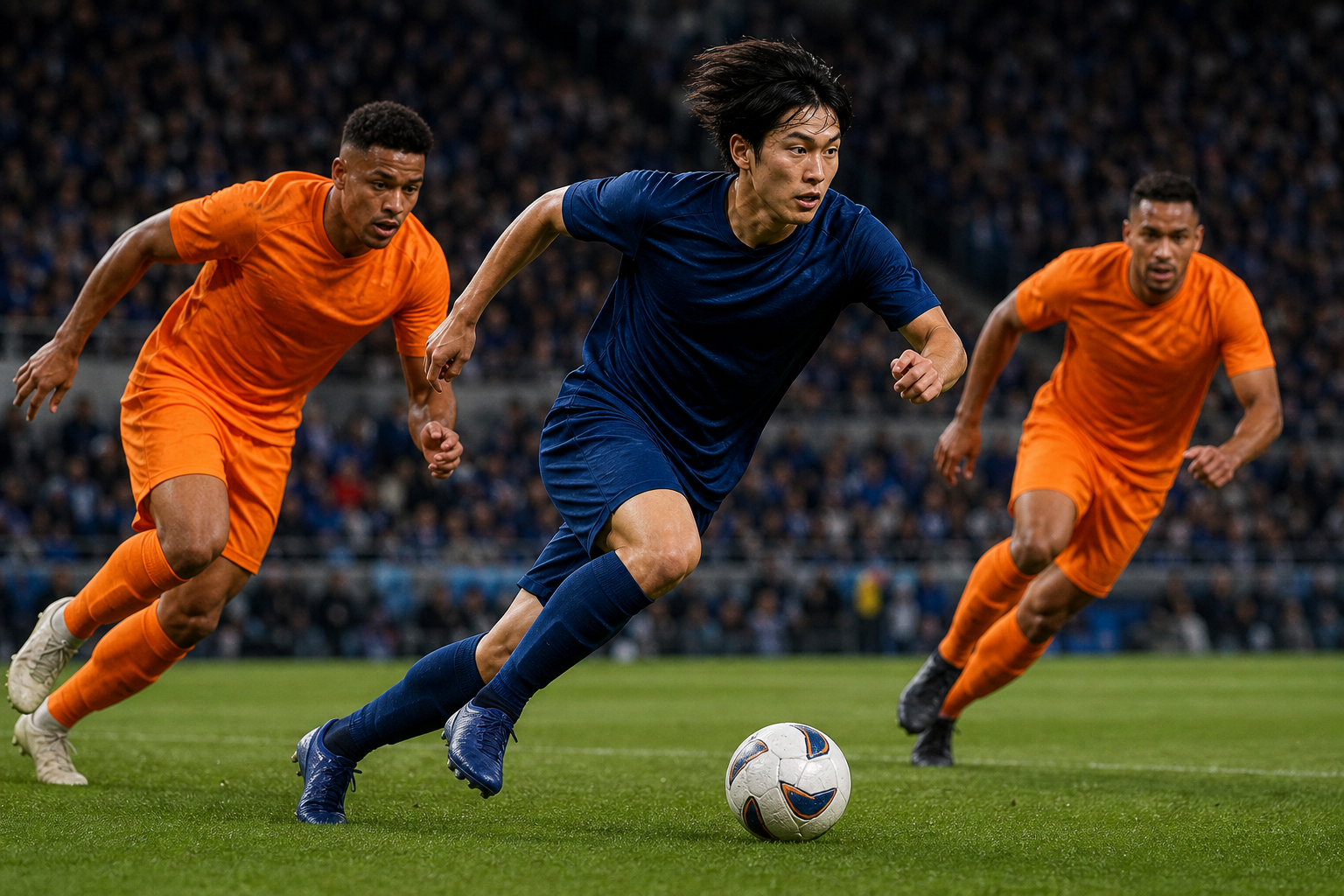
Japan's 2-2 draw with the Netherlands showed why the Samurai Blue can stand toe to toe with elite European opposition, from the pre-match numbers to the transition bursts, score swings, and what comes next.
Jun 15, 2026